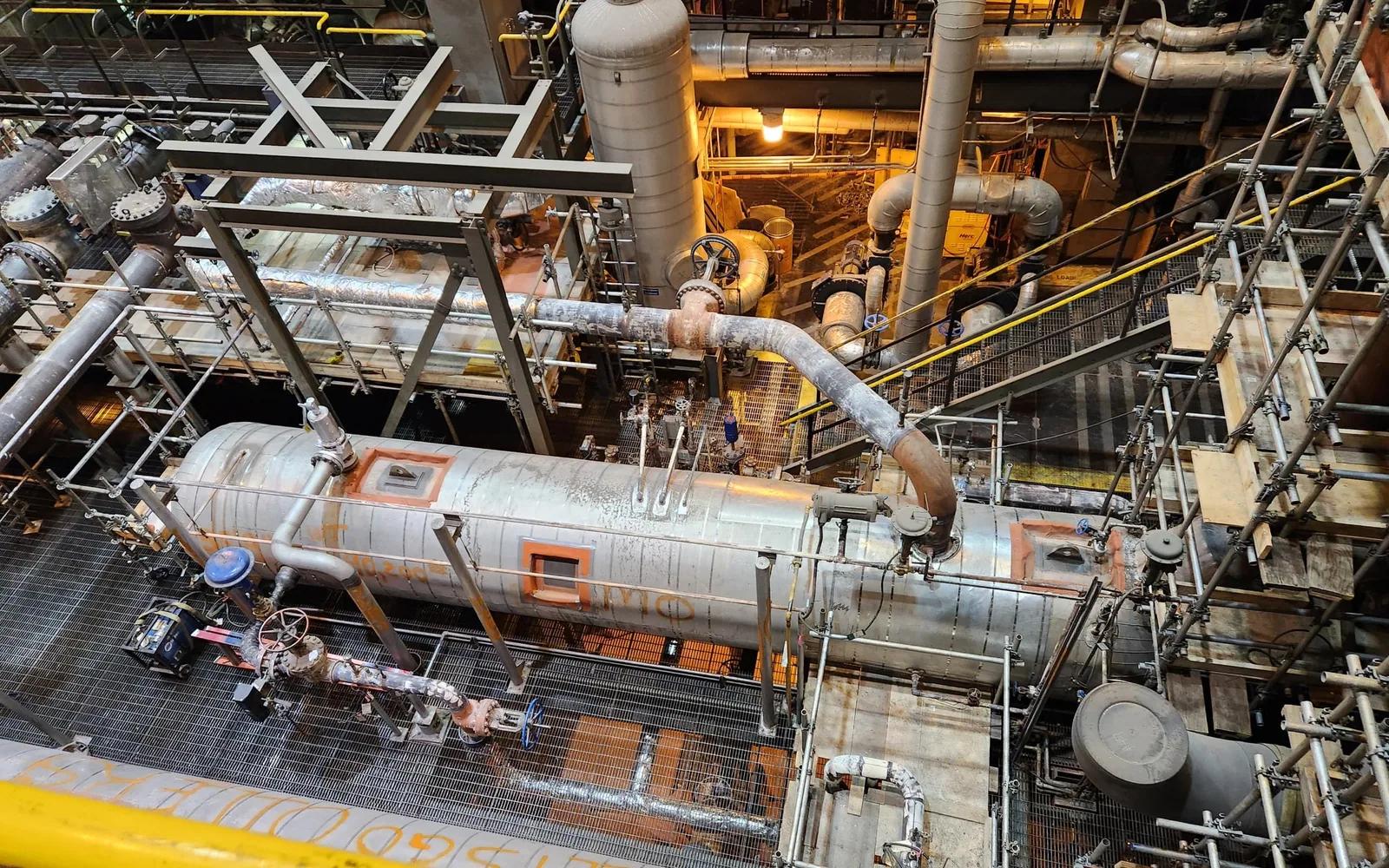
Quantitative Heat Exchanger Tube Wall-Loss Profiling via IRIS During Planned Turnaround
Turnaround Internal Rotary Inspection System (IRIS) ultrasonic examination across cleaned exchanger tube bundles to establish plugging and re-tubing decisions.
Asset: Shell-and-Tube Cooling Water Heat Exchangers (Carbon Steel Bundles) · Sector: Petrochemicals · Location: Rivers State Petrochemical Zone (Petrochemical Process Complex — Anonymized)
2. Technical Challenge
Recurring minor tube weepage forced premature process unit upsets, but standard hydro-testing only revealed outright through-wall leaks without quantifying near-failure tubes.
3. Scope & Technical Approach
Coordinated early high-pressure hydro-lancing with mechanical maintenance to clear scale deposits, then executed 360-degree water-flooded IRIS ultrasonic scanning across accessible bundle tubes, mapping exact ID/OD remaining wall thickness at baffle zones and inlet ends.
4. Execution Constraints
Tight 72-hour turnaround window between bundle hydro-cleaning, tube inspection, plugging execution, and channel cover box-up.
5. Verified Findings & Client Operational Value
- Quantified exact internal vs. baffle-wear wall loss percentages across scanned tubes.
- Identified sub-threshold thinned tubes proactively for preventive plugging alongside leaking tubes.
- Delivered color-coded tube-sheet baseline maps guiding future bundle replacement procurement.
Rigorous pre-inspection hydro-blasting verification is essential—any residual hard scale inside tubes creates false echoes or acoustic blockage during IRIS.
Need Inspection or QA/QC Support?
Share your asset details, applicable engineering codes, and target project window with our technical team to initiate a quotation review.